Colin and I have built our business on partnerships. Some of them thrived. They're still running, still growing, still the best professional decisions we ever made. Others taught us expensive lessons. We've been on both sides of it, and what I can tell you is this: the difference almost never came down to the market, the deal, or the property. It came down to whether the right conversations happened early enough.
The playbook we put together is the result of nine years, four provinces, and more partnership structures than I can count. We're sharing it because we genuinely believe that better-structured partnerships lead to better outcomes: for investors, for communities, and for the operators building alongside them.
"It's easy to get excited about a deal and jump in together. But if you haven't had the hard conversations about the future, misalignment will creep in."
Nicole Fiore, Co-Founder, Coast to Coast Homes CanadaThe 5 Non-Negotiables Before You Partner
Before committing to any partnership, regardless of how well you know the person or how good the deal looks, Colin and I insist on alignment across five areas. Miss any one of them and you're building on sand.
-
01
Shared Long-Term Vision You can be excited about the same deal and still be building toward completely different futures. One partner wants to hold and grow; the other wants to cash out in three years. That misalignment will surface. The only question is when and how much it costs you. Make sure you're building the same future, not just the same project.
-
02
A Strong, Detailed Partnership Agreement Handshake deals are how good friendships become expensive legal disputes. A rock-solid agreement isn't a sign of distrust. It's a sign of respect. It protects both parties and makes every hard conversation easier, because the answer is already on paper.
-
03
Clear & Definitive Role Division Define who does what - and document it. Blurred lines don't just lead to inefficiency; they lead to resentment. When responsibilities overlap and accountability gets fuzzy, partnerships start to fracture quietly before they collapse loudly.
-
04
Communication & Conflict Resolution Style Can you have a hard conversation with this person right now, before any money is on the table? If the answer feels uncertain, the partnership will struggle when things get difficult, and in real estate, things always get difficult at some point.
-
05
Exit Plan & Business Insurance Every partnership ends, by design, by circumstance, or by crisis. Plan yours on paper before life decides for you. A pre-agreed buyout formula and clear contingency plan prevents a forced sale or legal battle when one partner's situation changes unexpectedly.
The Question Most Investors Skip: Hire or Partner?
Not every business relationship needs to be a partnership. Before you split equity with anyone, ask three questions: Do I need execution, or strategic leadership? Is this role replaceable, or does it require long-term alignment? Would hiring achieve the same outcome without giving up ownership?
If someone is doing a job (managing a project, handling a specific function), hire them. If they're bringing capital, long-term vision, or taking on meaningful risk alongside you, then consider partnering. Giving equity to someone for doing a job you could pay for is one of the most common and costly mistakes in real estate.
How We Structure Ours
In our Nova Scotia new builds, our partners are the builders. They handle construction, we handle capital raising and finances. Clear division. No overlap. In Victoria, where we're moving into 6–12 unit missing middle development, we brought in partners who cover our gaps and complement our strengths, because at that scale you can't afford to be a bottleneck in your own business. For our Ontario development, we made a deliberate choice to hire an experienced general contractor rather than partner, because what we needed was execution, not equity sharing.
Every structure is intentional. That's what the playbook is built around.
The 10-Point Partnership Readiness Checklist (Preview)
- Do we have a shared long-term vision?
- Are our roles clearly defined?
- Is the financial structure fair for both parties?
- Do we have a structured decision-making process?
- Can we openly discuss conflicts and feedback?
Download the full playbook to get the complete checklist + the profit split framework, exit clause templates, and our real case studies →
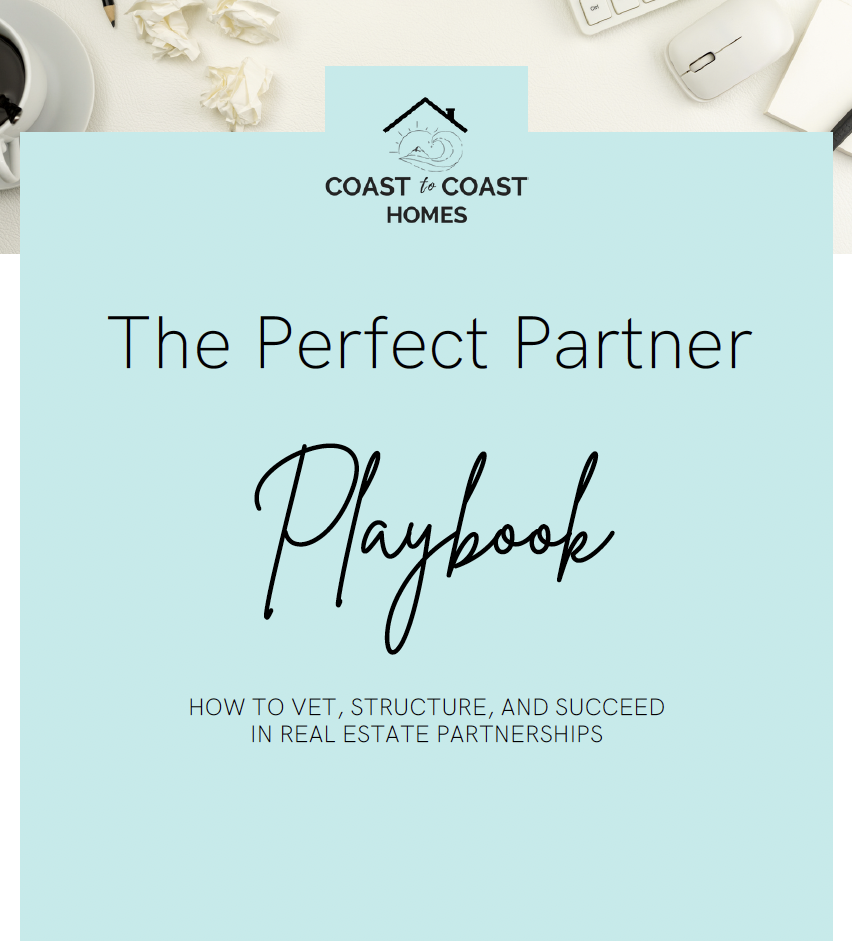
The Perfect Partner Playbook
How to vet, structure, and succeed in real estate partnerships. From a team that's done it across four provinces.
- The 5 non-negotiables before you sign anything
- Our top 3 partnership agreement clauses (including the buyout formula we use)
- The profit split framework and when to adjust it
- Exit strategy and contingency planning templates
- The hiring vs. partnering decision framework
- Real case studies: Nova Scotia, Victoria, and Ontario
- The full 10-point Partnership Readiness Checklist
You're in. Thank you! Click below to download your copy of The Perfect Partner Playbook. A confirmation has been sent to your inbox as well.
Download the Playbook →